
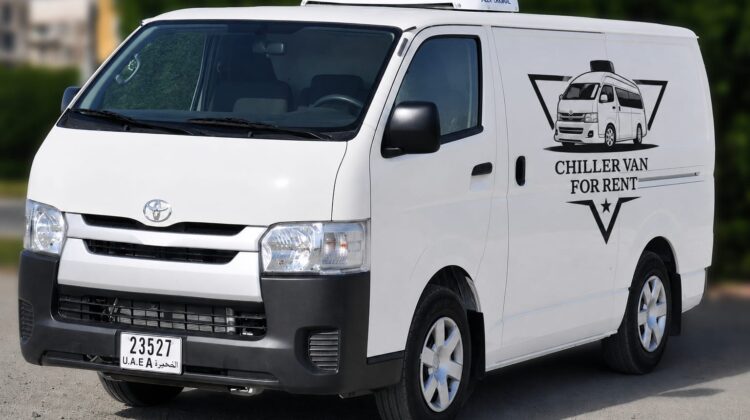
What Is Cold Chain Logistics? A Complete Guide
The plain-English explanation of cold chain logistics — what it means, the five stages every shipment passes through, the temperature zones involved, and why keeping the chain unbroken is especially hard in a UAE summer.
On this page
- What is cold chain logistics?
- Why it matters
- The 5 stages of a cold chain
- Temperature zones explained
- Equipment & technology
- Challenges in the UAE
- Cold chain vs regular logistics
- Choosing a cold chain partner
- FAQ
What is cold chain logistics?
Cold chain logistics is the storage and transport of temperature-sensitive goods — fresh food, frozen products, pharmaceuticals, flowers and more — within a specific temperature range, continuously, from the point of origin to the final customer. The word “chain” is the important part: if the product drops out of range at any single link, from the farm, to the warehouse, to the truck, to the shop shelf, the chain is considered broken, even if every other step was perfect.
In practice, cold chain logistics covers four things working together: cold storage (warehouses, chillers, freezers), refrigerated transport (chiller vans, freezer trucks, refrigerated trucks), monitoring (temperature logging and GPS tracking), and handling procedures (how quickly doors open, how cargo is packed, how long it sits on a loading bay).02
Why cold chain logistics matters
For food businesses, an unbroken cold chain is what stands between fresh stock and spoiled stock — and, more seriously, between safe food and a food-safety incident. For pharmaceutical and healthcare distributors, it’s what keeps vaccines and medicines effective; many biologics lose potency permanently once they exceed a set temperature, even briefly. For florists, dairy producers and hospitality groups, it’s the difference between product that sells and product that gets written off.
There’s also a compliance dimension. In the UAE, food-handling businesses are expected to operate within HACCP (Hazard Analysis and Critical Control Points) principles, and municipality food-safety audits increasingly ask for documented proof — temperature logs, not just assurances — that cold chain integrity was maintained during transport.
“A cold chain is only as strong as its weakest link — and the weakest link is almost always somewhere in transport, not storage.”03
The 5 stages of a cold chain
Most cold chains, whatever the industry, break down into the same five stages. Understanding where your business sits in this chain helps identify where the biggest risk actually is — for most Dubai businesses, it’s stage 3 and stage 5.
STAGE 1
🏭 Production / sourcing
Farm, factory or supplier prepares goods at the correct starting temperature.
STAGE 2
🏬 Cold storage
Chilled or frozen warehousing holds stock at a stable set point.
STAGE 3
🚛 Refrigerated transport
Chiller vans, freezer trucks and refrigerated trucks move goods between sites.
STAGE 4
📦 Distribution / cross-dock
Goods are consolidated, sorted or transferred between vehicles.
STAGE 5
🏪 Last-mile delivery
Final delivery to the store, pharmacy, kitchen or customer door.
Operator insight · from our dispatch floor
Stage 3 and stage 5 are where cold chains actually break
Warehouses rarely fail — they’re built for one job and monitored constantly. What we see go wrong is in transport and last-mile: a van that wasn’t pre-cooled before loading, doors held open too long on a multi-stop round, or cargo packed so tightly that cold air can’t circulate. Those two stages are where a genuinely cold-chain-trained driver and a pre-conditioned vehicle earn their keep.04
Temperature zones explained
“Cold chain” isn’t one temperature — it’s a set of zones, each suited to different cargo. Getting the zone wrong is one of the most common (and costly) mistakes businesses make when booking transport.
| Zone | Typical range | Common cargo |
|---|---|---|
| Frozen | −18°C to −22°C | Ice cream, frozen meat, frozen seafood, frozen-ready meals |
| Chilled | 0°C to +8°C | Fresh produce, dairy, beverages, flowers, bakery, catering |
| Adjustable / pharma | −10°C to +10°C | Pharmaceuticals, vaccines, clinical cargo, mixed-temperature loads |
| Ambient / dry | Not refrigerated | Packaged dry goods, non-perishables — no cold chain required |
Note that “refrigerated” and “chiller” aren’t interchangeable in the industry: a chiller van or chiller truck is fixed to the 0°C–+8°C chilled range, while a refrigerated truck has a digitally adjustable set point — useful when your cargo mix changes from run to run, or when you need a precisely documented figure for pharma compliance.05
Equipment & technology that powers the cold chain
Modern cold chain logistics relies on more than an insulated box on wheels. The equipment that actually keeps goods in range includes:
- Insulated, factory-built vehicle bodies — purpose-built chiller and freezer vans/trucks, not a cargo van with a retrofitted unit.
- Refrigeration units — digitally controlled systems (commonly Thermo King, Carrier or Kingtec) that hold a set point rather than just “running cold.”
- Pre-conditioning before loading — the vehicle body is brought to temperature before cargo goes in, not after.
- GPS tracking — live location visibility for route and dwell-time accountability.
- Temperature data loggers — continuous, timestamped records that prove the range was held, not just a driver’s word.
- HACCP-compliant sanitation — food-grade interiors, cleaned and documented between dispatches.
06: Common cold chain challenges in the UAE
Cold chain logistics is hard everywhere, but the UAE adds a few specific pressures that businesses elsewhere don’t deal with year-round:
- Extreme ambient heat. Summer temperatures regularly exceed 45°C, which shrinks the safe window during loading, unloading and any stop where doors are open.
- High humidity. Coastal humidity accelerates condensation inside poorly sealed vehicles and speeds spoilage the moment cargo leaves a controlled environment.
- Long intercity and port runs. Port-to-warehouse seafood and meat freight, and Dubai–Abu Dhabi–Sharjah distribution routes, mean longer exposure windows than short city hops.
- Multi-stop last-mile delivery. Every extra stop is another door-open event — the single biggest driver of temperature drift on a route.
- Documentation expectations. HACCP audits and client due diligence increasingly expect logged proof, not verbal assurance, that the chain held.
“In a Dubai summer, the difference between a pre-cooled vehicle and one that ‘runs cold once loaded’ can be the difference between compliant cargo and a written-off delivery.”07
Cold chain logistics vs regular logistics
It’s worth being explicit about what separates the two, because it explains why cold chain transport costs more and can’t be substituted with standard freight when temperature-sensitive cargo is involved.
🌡️ Cold chain logistics
- Temperature must be actively controlled and maintained
- Vehicle is pre-conditioned before cargo loads
- Time-sensitive — delays can mean spoilage, not just lateness
- Requires temperature logging and documentation
- Driver needs cold-chain-specific handling training
📦 Regular (ambient) logistics
- Goods are stable at outside temperature
- No pre-conditioning or set point required
- Delays affect timing, not typically product integrity
- No temperature documentation needed
- Standard driver training is sufficient
08: How to choose the right cold chain logistics partner
Whether you’re a restaurant group, a pharma distributor or a wholesaler, the same checklist applies when you’re evaluating who moves your temperature-sensitive cargo:
1: HACCP certification
Vehicles and handling should be HACCP-compliant, with certificates available on request.
2: The right vehicle for your zone
Fixed chilled, fixed frozen, or adjustable — match the vehicle to your actual temperature range rather than “whatever’s available.”
3: GPS tracking and temperature logs
You should be able to see the route and prove the temperature held, not just be told it did.
4: Cold-chain-trained drivers
Someone who understands door-open discipline and pre-conditioning, not a general delivery driver.
5: Transparent, all-inclusive pricing
Driver, GPS and certification should be in the quoted rate — not added at invoice.
6: Same-day dispatch capability
Cold chain needs often surface urgently — a partner who can move fast across the emirates you operate in matters.09
Frequently asked questions
Q: What is cold chain logistics in simple terms?
Ans: Cold chain logistics is the process of storing and transporting temperature-sensitive goods — like fresh food, frozen products and pharmaceuticals — within a specific temperature range from the point of origin to the final customer, without any break in that controlled temperature.
Q: What are the main stages of a cold chain?
Ans: A typical cold chain has five stages: production or sourcing, cold storage, refrigerated transport, distribution or cross-docking, and last-mile delivery to the retailer, pharmacy or end customer. Temperature must stay within range at every stage.
Q: What temperature range is used for cold chain logistics?
Ans: It depends on the product. Chilled goods like dairy, produce and flowers typically move between 0°C and +8°C. Frozen goods like ice cream and frozen meat require −18°C to −22°C. Pharmaceuticals and vaccines often need an adjustable, precisely documented range, commonly −10°C to +10°C.
Q: Why is cold chain logistics especially challenging in the UAE?
Ans: UAE summer temperatures regularly exceed 45°C, which shortens the safe window during loading, unloading and last-mile stops. High humidity, long intercity and port-to-warehouse runs, and strict HACCP and municipality food-safety expectations add further pressure that most other markets don’t face year-round.
Q: How do I choose a reliable cold chain logistics partner in Dubai?
Ans: Look for HACCP-certified vehicles, live GPS tracking with temperature logging, a fleet matched to your actual temperature range and volume, a cold-chain-trained driver included, transparent all-inclusive pricing, and same-day dispatch capability across the emirates you operate in.
Need cold chain transport in Dubai, Sharjah or Abu Dhabi?
🕑 Open 24/7 · Same-day dispatch
CV: Chiller Vans for Rental TeamDubai’s cold chain specialists since 2012 — chiller, freezer & refrigerated van and truck rental across the UAE.
Ready to protect your cold chain?
HACCP-certified vehicles, GPS tracking and a cold-chain-trained driver — included, same-day, across Dubai, Sharjah and Abu Dhabi.